 HOROLOGY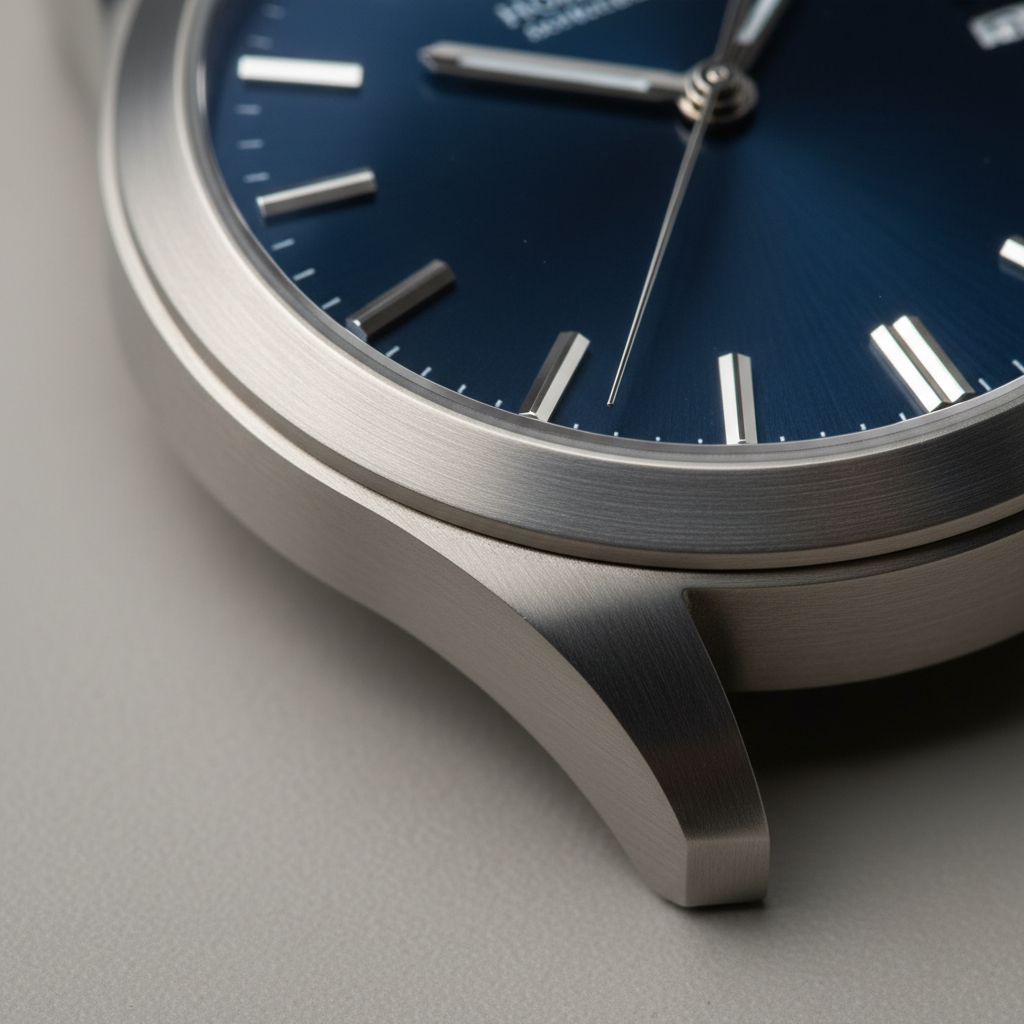
Est. 2019 — Geneva
Horology
Swiss movements.
Brutalist cases.
Six pieces · 2026 Edition
- Swiss Lever Escapement·
- Brutalist Case Architecture·
- Grade 5 Titanium·
- Côtes de Genève·
- Sapphire Exhibition Back·
- Perlage Finishing·
- Blued Steel Hands·
- Anti-Reflective Crystal·
- Swiss Lever Escapement·
- Brutalist Case Architecture·
- Grade 5 Titanium·
- Côtes de Genève·
- Sapphire Exhibition Back·
- Perlage Finishing·
- Blued Steel Hands·
- Anti-Reflective Crystal·
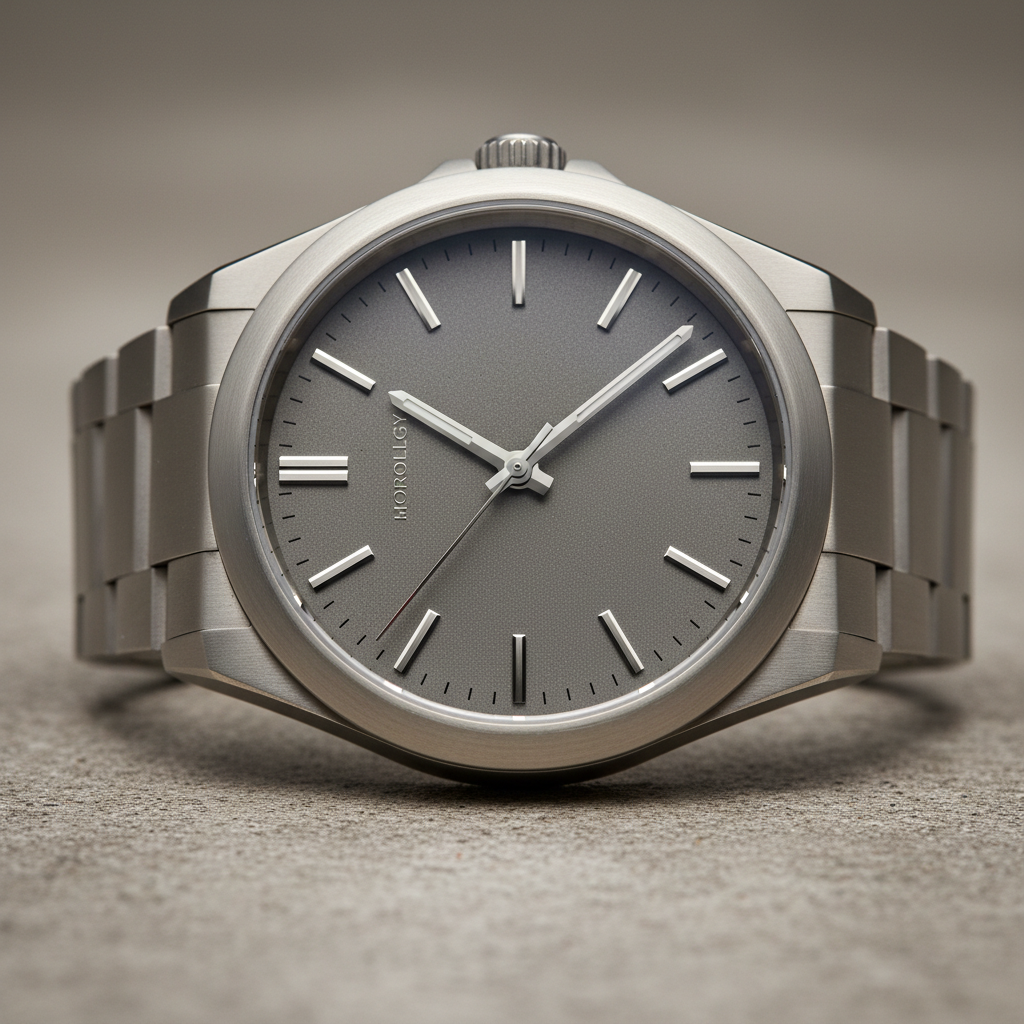
Ref. HOR-001-Ti
Monument I
The first piece. A 44mm slab of Grade 5 titanium that refuses every convention of case design. The dial is a poured concrete grey, broken only by applied indices machined to a 0.1mm tolerance.
Ref. HOR-001-Ti
Monument I
— Curator's Note
Monument I was conceived after a visit to the Brutalist architecture of Chandigarh. The case proportions reference Le Corbusier's Secretariat building — the same brutal confidence in raw material, the same rejection of decorative impulse. The movement, an independent Swiss calibre beating at 21,600vph, is visible through a domed sapphire caseback that acts as a lens into the architecture beneath.
— Specifications
— Movement
Swiss lever escapement, 21,600 vph, 60-hour power reserve. Côtes de Genève on rotor bridge. Blued steel pallet fork and escape wheel.
— Case Finishing
Full bead-blast exterior. Polished bevels on lug chamfers only. Exhibition caseback with micro-sandblasted titanium ring. Every surface transition is intentional — rough against polished, raw against refined.
Edition
Limited to 12 pieces annually. Each numbered on the caseback, signed by the master watchmaker.
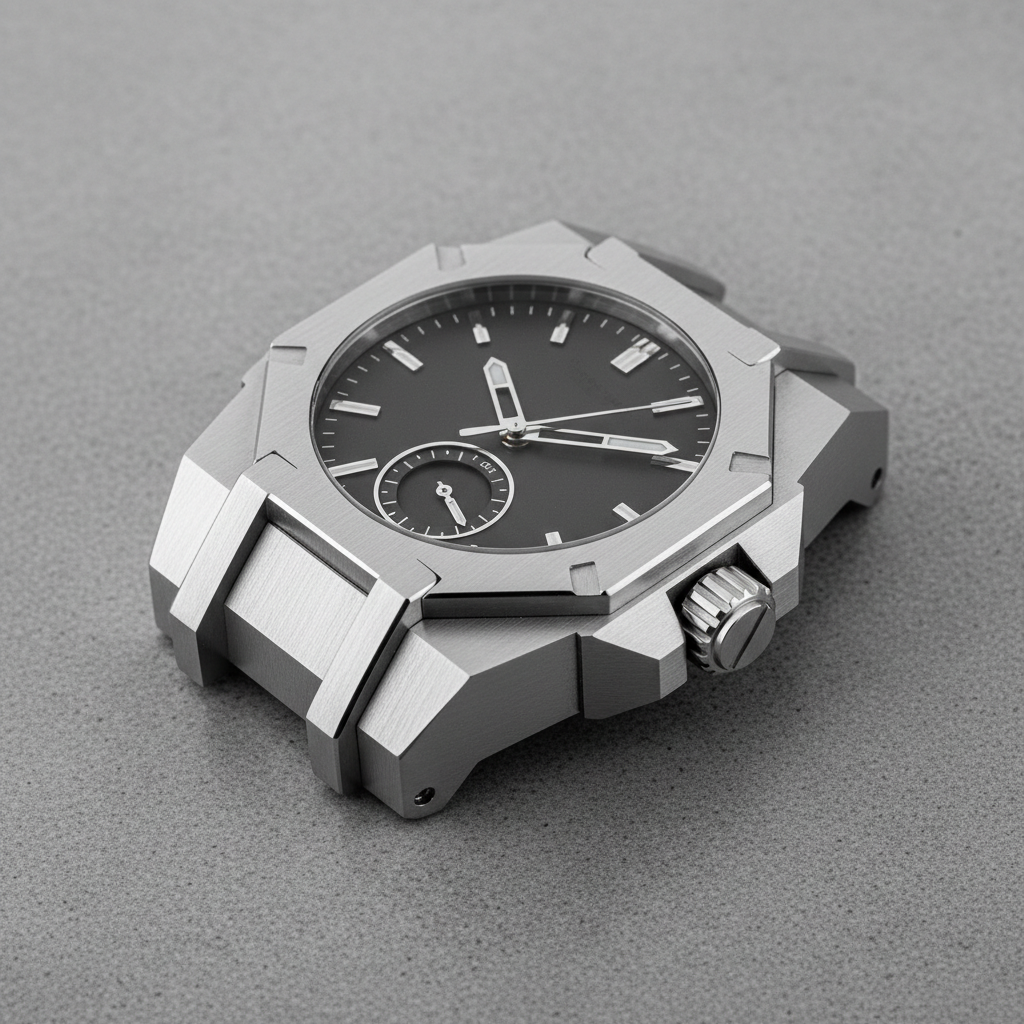
Ref. HOR-002-St
Bunker II
A 42mm steel fortress. The case architecture draws from Soviet Constructivism — angular cuts that catch light from unexpected angles, a crown machined like a sculptor's chisel handle.
Ref. HOR-002-St
Bunker II
— Curator's Note
Bunker II emerged from a single question: what does a watch look like when it is designed by someone who has never owned one? The answer is an object that starts conversations in Basel hotel bars. The dial text is set in a bespoke typeface drawn from Soviet-era engineering manuals. The crown guards are load-bearing, not decorative — they will take the impact if the watch is worn as it should be.
— Specifications
— Movement
In-house regulated Swiss ETA base, modified rotor with tungsten weight. 42-hour power reserve. Perlage on main plate. 25 jewels.
— Case Finishing
Alternating brushed planes and mirror-polished cuts. The case is a study in contrast — no two adjacent surfaces share the same finish. Crown is hand-knurled on a CNC lathe to a depth of 0.3mm.
Edition
Open edition, limited to 30 pieces per calendar year. Production suspended when quota is reached.
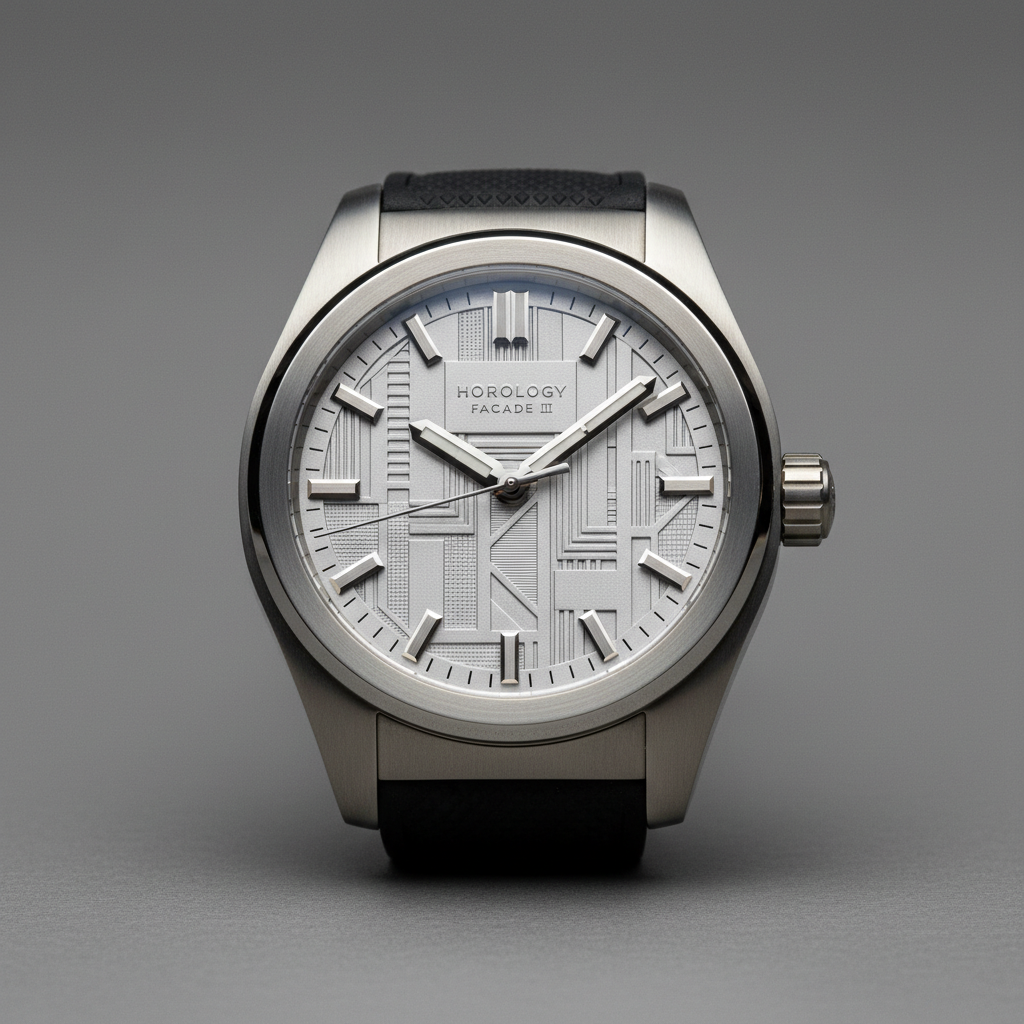
Ref. HOR-003-Ti-St
Facade III
Bi-material case construction — titanium flanks married to a steel bezel. The dial reads like a brutalist facade: horizontal registers, no unnecessary punctuation.
Ref. HOR-003-Ti-St
Facade III
— Curator's Note
Facade III is the most architectural piece in the collection. The dial was designed in collaboration with a Swiss graphic designer whose primary medium is concrete signage. The hour registers are not printed — they are engraved through a photochemical process that leaves the aluminium dial with a depth of texture visible only under raking light. In flat light, the dial appears almost blank. In direct light, it reveals everything.
— Specifications
— Movement
Unitas 6498-1 hand-wind movement, modified with skeletonised rotor bridge. 46-hour power reserve. Visible through open-worked dial aperture at 6 o'clock.
— Case Finishing
Titanium flanks: full bead-blast. Steel bezel: hairline brush in a single direction. Dial: photochemical engraving on anodised aluminium, sealed with anti-reflective lacquer.
Edition
Limited to 8 pieces. Three remain available for the 2026 edition.
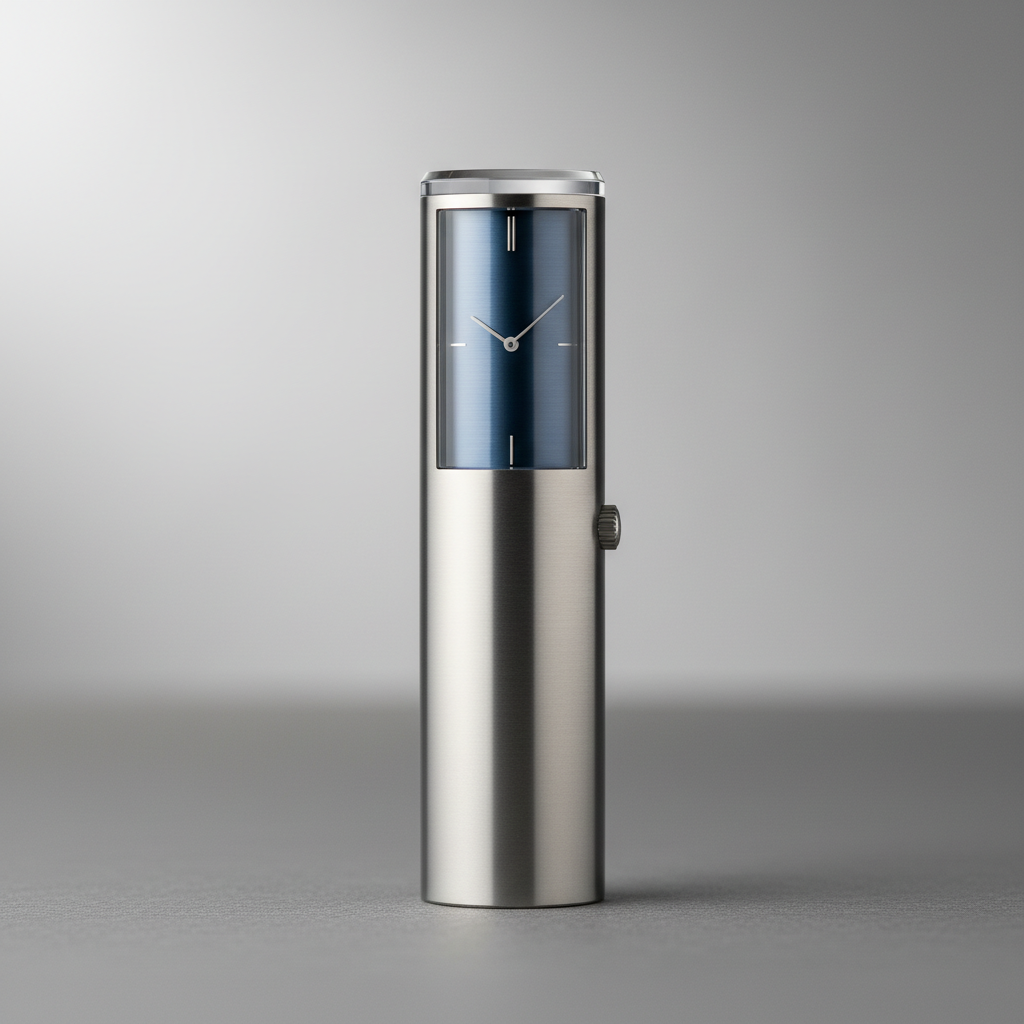
Ref. HOR-004-Ti
Pillar IV
Tall, narrow, uncompromising. The 38mm × 14mm case profile is a column — every dimension chosen for structural integrity, not comfort.
Ref. HOR-004-Ti
Pillar IV
— Curator's Note
Pillar IV is our most divisive piece, and the one most frequently asked about. The height-to-diameter ratio violates every conventional watchmaking proportion. It was designed that way deliberately. The wearer will feel it on the wrist — not uncomfortably, but noticeably. It demands acknowledgement. The caseback carries a single engraved line from Mies van der Rohe: "Less is more." We engraved it in German.
— Specifications
— Movement
Calibre UNITAS 6497-1, hand-wound. Regulator-style dial layout. 46-hour power reserve. Blued screws throughout. Côtes de Genève decoration on all bridges.
— Case Finishing
Monolithic bead-blast finish, interrupted only by the crown shoulders which are polished to a mirror. The crown itself is machined to 0.02mm tolerance — the tightest in the collection.
Edition
Limited to 10 pieces. Caseback engraved in German. Delivered with certificate of authenticity signed by the master watchmaker.
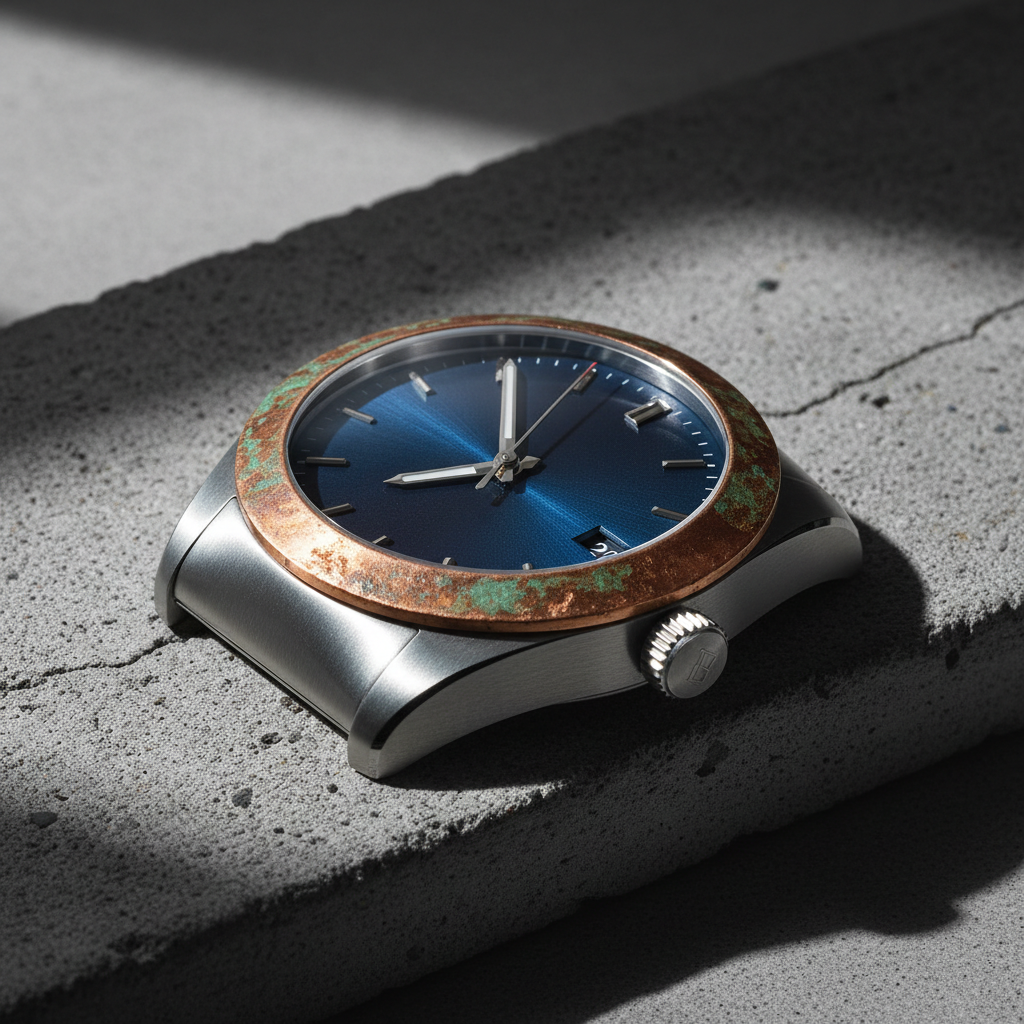
Ref. HOR-005-St-Cu
Stratum V
Steel and copper — a combination that should not work and does. The copper bezel will patinate with wear. This is not a flaw. It is the point.
Ref. HOR-005-St-Cu
Stratum V
— Curator's Note
Stratum V is the most material-honest piece we have made. The copper bezel is not treated or coated. It will develop a patina unique to the wearer — their chemistry, their climate, their habits. In five years, no two Stratum V pieces will look identical. The steel case back will remain pristine. The copper front will become a record of a life lived wearing it. We find this interesting. Some collectors do not. We make it anyway.
— Specifications
— Movement
ETA 2824-2 automatic, regulated to chronometer standards. 38-hour power reserve. Copper-coloured rotor visible through caseback.
— Case Finishing
Steel: hairline brush, longitudinal direction. Copper bezel: raw, uncoated. Lugs: polished bevel, brushed flat. The contrast between aged copper and brushed steel is the design.
Edition
Open edition. No two pieces will look the same after 12 months of wear.
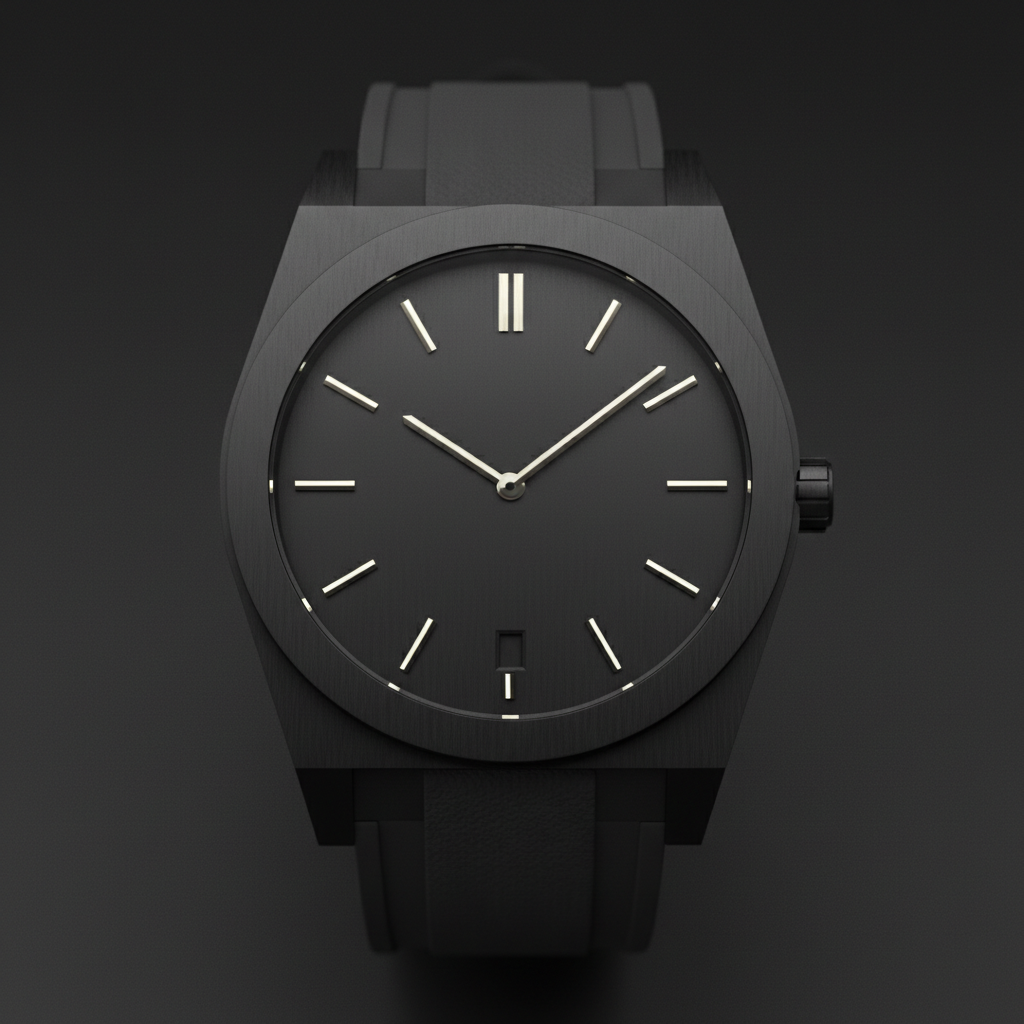
Ref. HOR-006-DLC
Monolith VI
DLC-coated steel. Black on black on black. The indices are the only relief — polished white gold, 0.8mm proud of the dial surface.
Ref. HOR-006-DLC
Monolith VI
— Curator's Note
Monolith VI is the final piece in the first collection and the darkest object we know how to make. The DLC coating absorbs light at 98.7% efficiency — the case appears to have no surface texture, only volume. The white gold indices were added not for legibility but for contrast: a reminder that there is geometry here, that this is a watch and not a void. We considered making the indices from the same DLC steel. We are glad we did not.
— Specifications
— Movement
Swiss lever escapement, 28,800 vph. DLC-coated rotor. 72-hour power reserve. All movement components treated with black PVD.
— Case Finishing
Diamond-Like Carbon coating, 3 microns. Hardness: 3000 Vickers. The coating is harder than the steel beneath it. The case will outlast the movement by centuries. White gold indices: polished to mirror, set 0.8mm proud of dial.
Edition
Limited to 6 pieces. The final piece in the first Horology collection.

Location
Geneva, Switzerland
— The Atelier
Where concrete
meets calibre.
Every Horology piece begins as a sketch on graph paper in a former industrial space off the Rue de la Corraterie. The cases are not designed — they are excavated. We start with a block of Grade 5 titanium or 316L steel and remove everything that isn't the watch. The result is an object that reads as architecture before it reads as horology.
Movement selection is equally uncompromising. We work exclusively with three independent Swiss ébauche suppliers whose finishing standards align with our own. Every bridge receives the same attention as the visible dial. We build six watches per year. That number will not change.
6
Pieces per year
4
Complications max
312
Hours per movement
1
Master watchmaker